It has become clear that the special trains operated by the government to ease suffering – and to counteract a disastrous lack of lockdown planning – played a significant role in spreading the virus
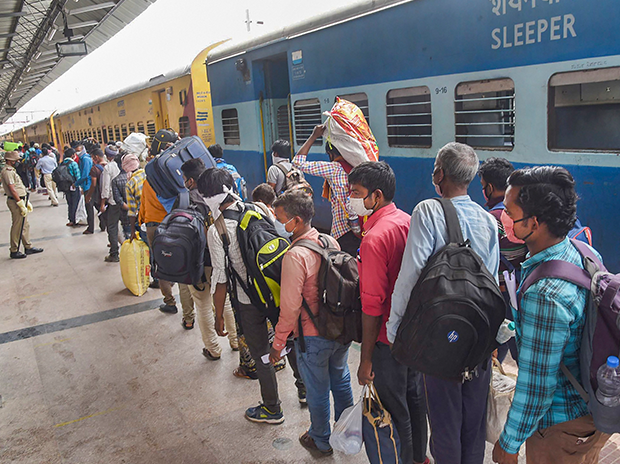
The crowds surged through the gates, fought their way up the stairs of the 160-year-old station, poured across the platforms and engulfed the trains. It was May 5, around 10 a.m. Surat was beastly hot, 106 degrees. Thousands of migrant laborers were frantic to leave — loom operators, diamond polishers, mechanics, truck drivers, cooks, cleaners, the backbone of Surat’s economy. Two of them were Rabindra and Prafulla Behera, brothers and textile workers, who had arrived in Surat a decade ago in search of opportunity and were now fleeing disease and death.
Rabindra stepped aboard carrying a bag stuffed with chapatis. His older brother, Prafulla, clattered in behind, dragging a plastic suitcase packed with pencils, toys, lipstick for his wife and 13 dresses for his girls.“You really think we should be doing this?” Prafulla asked. “What else are we going to do?” Rabindra said. “We have nothing to eat and our money’s out.”
They were among tens of millions of migrant workers stranded without work or food after Prime Minister Narendra Modi imposed a national coronavirus lockdown in March. By spring and summer, these workers were so desperate that the government provided emergency trains to carry them back to their home villages. The trains were called Shramik Specials, because shramik means “laborer” in Hindi…Read More
Comments
Post a Comment